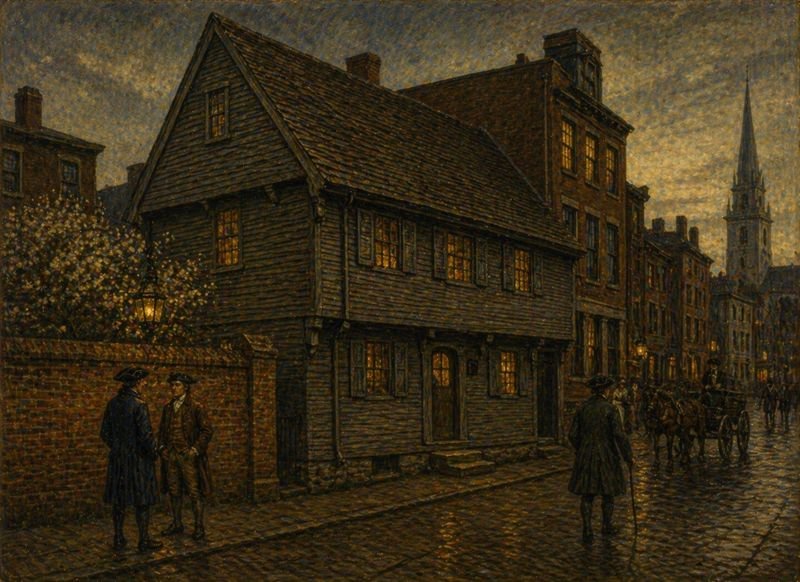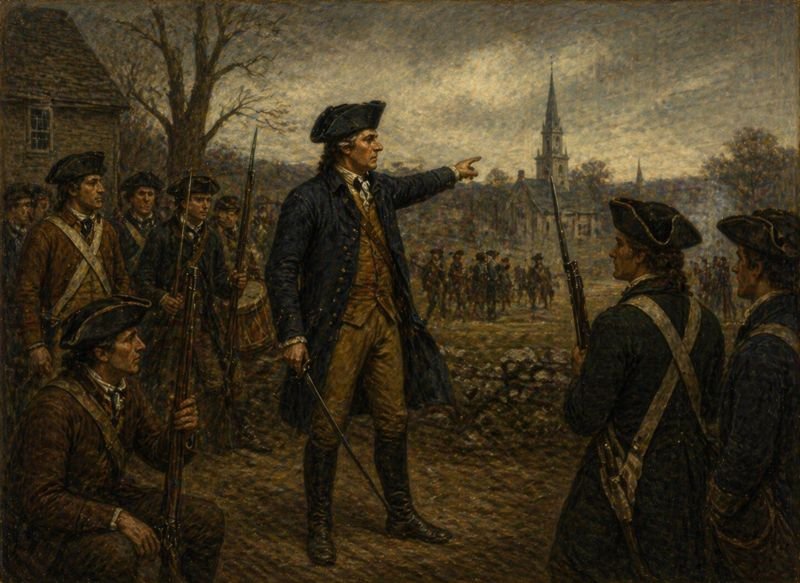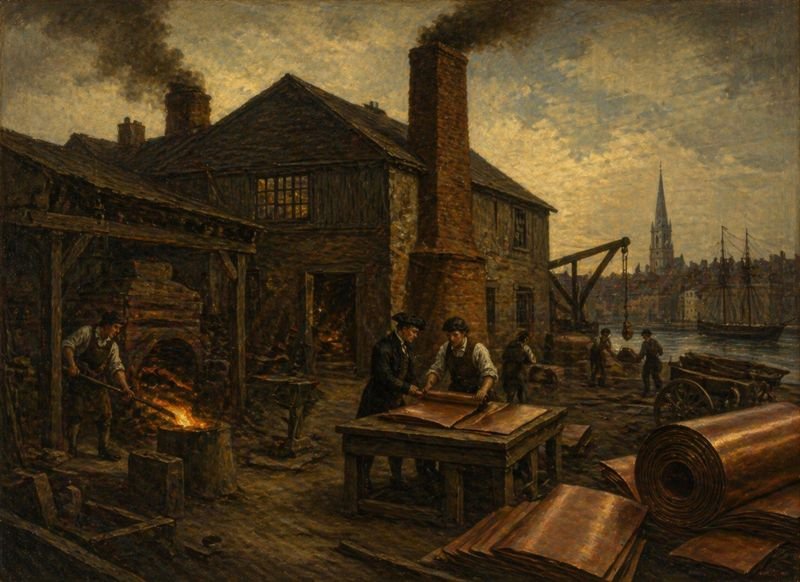
Paul Revere didn’t begin his adult life as a political figure. He was, first and foremost, a skilled artisan i.e., a silversmith operating in the busy commercial and social world of colonial Boston. Yet the introduction of the Stamp Act proved to be a turning point, drawing Revere and many like him into political life. The Act did not simply impose a tax; it disrupted the economic, social, and professional networks in which Revere operated, pushing him toward activism and ultimately into a central role within the patriot movement.
The Stamp Act required that a wide range of printed materials such as legal documents, newspapers, pamphlets, licenses, and even playing cards etc., carry an official stamp purchased from British authorities. For artisans like Revere, who depended on a vibrant urban economy, the implications were immediate. The Act threatened to slow commercial transactions, reduce the circulation of printed materials, and undermine the broader economic activity that sustained tradespeople. More importantly, it represented an assertion of authority by Parliament over colonial life in a way that bypassed local institutions.
Boston in the mid-1760s was already a politically active environment, and the reaction to the Stamp Act was swift. Protests erupted across the city, organized by merchants, laborers, and political leaders who shared a growing sense of grievance. Revere, as a member of the artisan class, was closely connected to these groups. His workshop was not only a place of production but also a social hub, where ideas were exchanged and political opinions formed. The networks he participated in such as guild-like associations, neighborhood groups, and informal gatherings etc., became the foundation for collective action.
It was within this context that Revere began to engage more directly with politics. One of the most important avenues for his involvement was his skill as an engraver. Whilst silversmithing was his primary trade, engraving allowed him to produce images and printed materials that could be widely circulated. During the protests against the Stamp Act, visual imagery became a powerful tool for communication. Political cartoons, broadsides, and symbolic illustrations helped convey complex ideas in ways that were immediate and emotionally compelling.
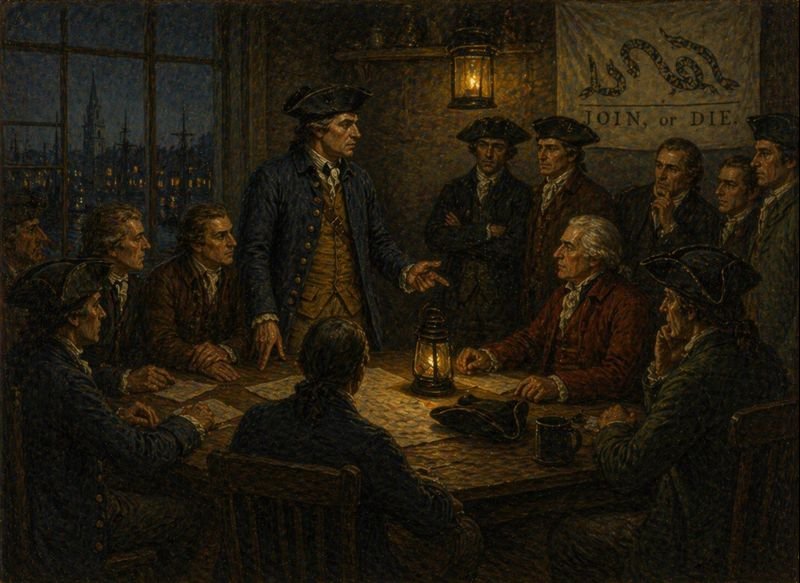
Revere’s early engravings reflected the themes of resistance that were emerging in Boston. He produced images that criticized British policies and celebrated colonial unity, helping to reinforce the message that the Stamp Act was not merely a tax but a violation of rights. These works connected him to a broader network of activists, including members of the Sons of Liberty, who were organizing protests and coordinating resistance. Through this association, Revere moved from being a participant in local unrest to an active contributor to a growing political movement.
The repeal of the Stamp Act in 1766 did not end Revere’s political engagement; rather, it solidified it. The experience of collective protest had demonstrated that organized resistance could influence British policy, and it had strengthened the networks that made such resistance possible. For Revere, this period marked the transition from occasional involvement to sustained activism. He continued to produce engravings and became increasingly involved in the communication systems that linked colonial resistance efforts.
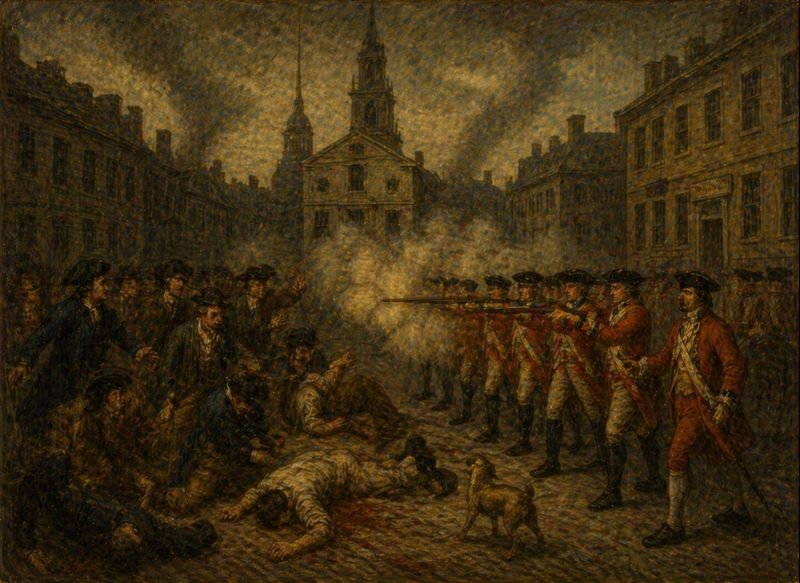
The Stamp Act also helped shape Revere’s understanding of the relationship between information and power. He saw firsthand how printed materials such as pamphlets, newspapers, and images etc., could influence public opinion and mobilize action. This insight would later be crucial in his response to the Boston Massacre, when his famous engraving helped define how the event was perceived across the colonies. The skills and networks he developed during the Stamp Act crisis enabled him to act quickly and effectively in moments of importance, such as the Boston Massacre of 1770.
Beyond his work as an engraver, Revere also became involved in the emerging systems of communication that sustained the patriot movement. He served as a courier, carrying messages between leaders and communities, and participated in committees that coordinated resistance. These roles required trust, reliability, and a deep commitment to the cause, qualities that Revere had begun to demonstrate during the Stamp Act protests.
In a broader sense, the Stamp Act drew Revere into politics by making the abstract issue of imperial authority tangible and immediate. It affected his livelihood, his community, and his sense of identity as a British subject. Like many colonists, he came to see political engagement not as an optional activity but as a necessary response to changing circumstances.
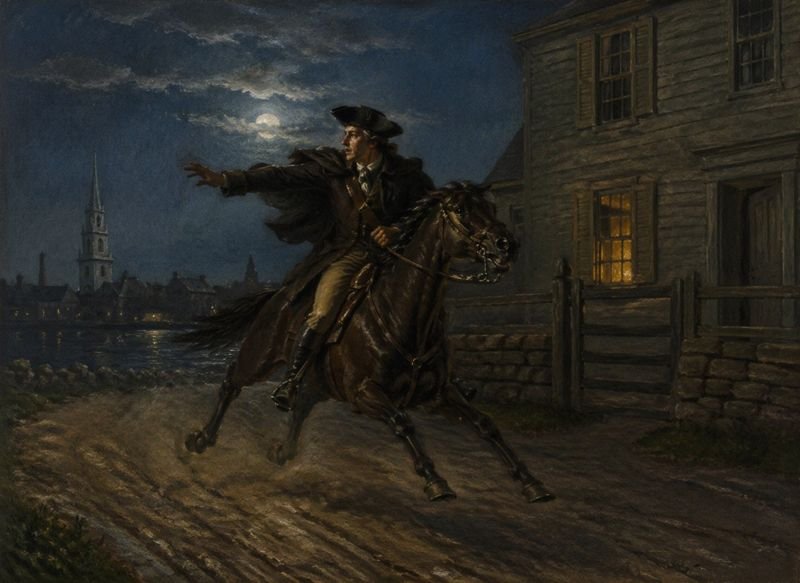
By the time more severe conflicts emerged in the late 1760s and early 1770s, Revere was already an established figure within the resistance movement. His involvement in events such as the Boston Massacre and his later role in warning colonial militias of British troop movements were built on the foundation laid during the Stamp Act crisis. What began as a reaction to a specific policy had evolved into a lifelong commitment to political action.
In this way, the Stamp Act can be seen as the moment at which Paul Revere’s life intersected with the larger forces of history. It transformed him from a craftsman into a political actor, illustrating how imperial policy could mobilize individuals and reshape communities. Revere’s subsequent contributions to the revolutionary movement cannot be fully understood without recognizing the formative impact of this early moment of resistance.