Whilst Paul Revere is most often remembered for his midnight ride, one of his most practical and consequential contributions to the American cause lay in the production of military supplies, particularly gunpowder and its critical components, during the American Revolutionary War. In a conflict where logistics could determine success or failure (something George Washington was acutely aware of), Revere’s technical skills and organizational efforts helped address one of the colonies’ most pressing vulnerabilities: a shortage of munitions.
At the outbreak of hostilities in 1775, colonial forces faced a severe lack of gunpowder. Unlike Britain, which possessed established industrial capacity and access to global resources, the American colonies had limited infrastructure for producing military materials. Gunpowder required a precise combination of ingredients(saltpeter, sulfur, and charcoal) and its manufacture involved both chemical knowledge and specialized equipment. Securing and producing these materials became an urgent priority for revolutionary leaders.
Revere’s involvement in this effort reflected both necessity and opportunity. As a trained artisan with experience in metallurgy and craftsmanship, he was well positioned to contribute to technical and industrial tasks. His earlier work as a silversmith had given him a strong understanding of materials, tools, and production processes. These skills were adaptable, allowing him to move into areas that were vital for the war effort.
One of Revere’s key contributions was in improving the manufacture of gunpowder by focusing on the production of its components, particularly saltpeter. Saltpeter (potassium nitrate) was the most difficult ingredient to obtain, as it was not readily available in large quantities in the colonies (much of it was reliant on French supplies). Efforts were made to extract it from natural sources such as soil and decomposing organic matter, a process that required careful management and technical expertise. Revere was involved in overseeing and refining aspects of this production, helping to increase efficiency and output.
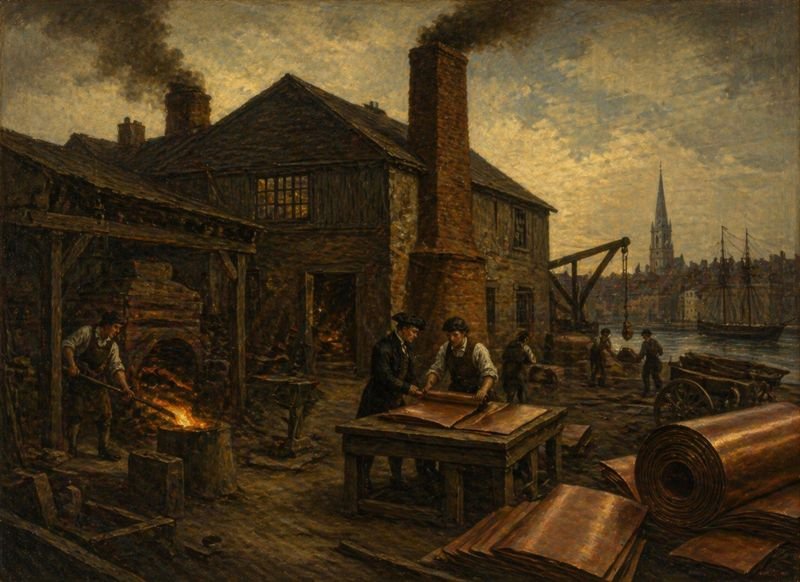
In addition to working on raw materials, Revere contributed to the broader infrastructure needed for munitions production. He helped establish facilities and systems that could support ongoing manufacture, rather than relying on sporadic or improvised efforts. This shift toward more organized production was essential in sustaining the war over time. It demonstrated an understanding that military success depended not only on battlefield tactics but also on the logistics necessary to maintain supplies.
Revere’s work extended beyond gunpowder itself to include the production of artillery and related equipment. His knowledge of metals allowed him to cast cannon and manufacture other military hardware. These efforts complemented his work with gunpowder, contributing to a more comprehensive approach to supplying the Continental forces. By engaging in multiple aspects of production, Revere helped strengthen the colonies’ capacity to wage war independently.
The importance of this work becomes clearer when considering the broader context of the Revolutionary War. Early in the conflict, shortages of gunpowder and ammunition were a constant concern. Colonial forces often had to ration supplies carefully, limiting their ability to engage in prolonged engagements. Improvements in production, even if incremental, had a direct impact on military capability. Revere’s contributions, therefore, were not merely technical but strategically significant.
Another aspect of Revere’s involvement was his role in organizing and managing production efforts. This required coordination with local authorities, workers, and other craftsmen. Establishing reliable processes and maintaining quality standards were ongoing challenges, particularly in a wartime environment where resources were scarce and conditions were unpredictable. Revere’s ability to navigate these challenges reflects his adaptability and commitment to the cause.
It is also important to recognize that Revere’s work in gunpowder manufacture was part of a broader pattern of innovation within the colonies. Faced with limited resources, Americans were forced to develop new techniques to meet their needs. Revere’s efforts exemplify this spirit of problem-solving, where individuals applied their skills in new ways to support the war-effort.
Despite the importance of his contributions, this aspect of Revere’s life has often been overshadowed by more dramatic stories. The image of the midnight rider is more easily remembered than the quieter, sustained work of production and supply. Yet without these efforts, the revolutionary cause would have struggled to sustain itself. Gunpowder, artillery, and other materials were as essential as leadership and strategy, and those who helped produce them played a vital role.
In the years following the war, Revere continued to develop his metallurgy pursuits, establishing businesses that contributed to early American manufacturing. His wartime experience likely influenced these endeavors, reinforcing the need of domestic production and technical expertise.
Ultimately, Paul Revere’s involvement in gunpowder manufacture highlights a different dimension of his contribution to the American Revolution. It shows him not only as a messenger or symbol, but as a practical problem-solver who helped address the needs of a fledgling nation at war. By applying his skills to the production of critical materials, he contributed to the foundation upon which military success depended, demonstrating that revolutions are sustained as much by technology and supply as by ideology.