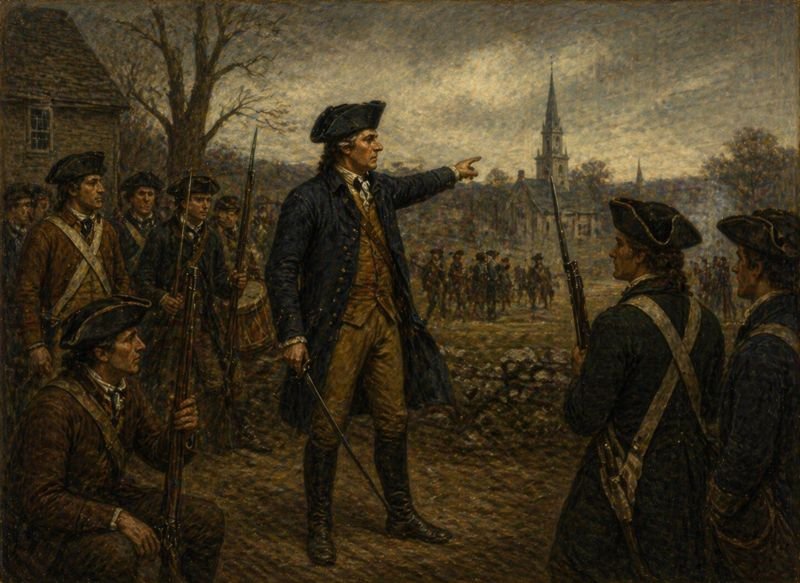
Paul Revere is widely remembered for his role in the American Revolution, yet his primary identity for much of his life was that of a skilled and successful silversmith (and later a Goldsmith). His work in this craft not only provided him with a livelihood but also shaped his social position, his network of relationships, and his ability to influence events in colonial Boston. Understanding Revere as a silversmith offers a deeper and more grounded view of his life and contributions.
Revere was born in Boston in 1734 into a family of artisans. His father, Apollos Rivoire (later known as Paul Revere Sr.), was a French Huguenot immigrant who had established himself as a silversmith. From an early age, Revere was trained in the trade, learning the technical skills required to shape, engrave, and finish silver objects. After his father’s death, he took over the family business, demonstrating both craftsmanship and an ability to manage a working shop.
The work of a silversmith in the 18th century required precision, patience, and creativity. Revere produced a wide range of items, including teapots, tankards, spoons, buckles, and ceremonial pieces. Many of these objects were made to order for clients, requiring an understanding of both design and function. His pieces were known for their quality and attention to detail, reflecting the high standards expected of skilled artisans in Boston.
Revere’s shop was more than a place of production; it was also a center of business and social interaction. He employed apprentices and journeymen, training the next generation of craftsmen whilst maintaining the output of his workshop. These relationships extended his influence and connected him to a broader network of artisans and tradespeople. In a city like Boston, where economic and social life were closely linked, these connections were essential.
As a silversmith, Revere also developed skills that extended beyond metalwork. Engraving, in particular, became an important part of his work. He produced decorative engravings for silver items as well as prints, bookplates, and illustrations. This ability to create and reproduce images later played a key role in his involvement in political communication, but it originated in his craft.
The economic position of a silversmith placed Revere within the middle ranks of colonial society. He was not part of the elite merchant class, but he was also not amongst the poorest laborers. This position gave him a degree of independence and respect within his community. It also meant that he was directly affected by economic changes, including fluctuations in trade and the impact of British policies on colonial markets.
Revere’s work required access to raw materials, particularly silver, which was often melted down and reused from older items or coins. This practice highlights the practical nature of the trade, where materials were valuable and rarely wasted. It also reflects the interconnected nature of the colonial economy, where local production depended on both domestic and imported resources.
Throughout his career, Revere demonstrated an ability to adapt. Whilst silversmithing remained his primary trade for many years, he also expanded into other areas, including dentistry, where he made and fitted false teeth, and later into larger-scale manufacturing. This willingness to diversify reflects both his entrepreneurial spirit and the changing economic landscape of the late 18th century.
Revere’s identity as a silversmith also influenced his perspective on society and politics. As an artisan, he was part of a community that valued skill, independence, and mutual support. These values were reflected in the networks he joined and the causes he supported. His workshop provided not only income but also a platform from which he could engage with others and participate in the life of the city.
Many of Revere’s silver pieces have survived and are now displayed in museums, offering a tangible connection to his work. These objects are valued not only for their craftsmanship but also for what they reveal about daily life in colonial America. Items such as teapots and serving vessels reflect the customs and social practices of the time, whilst more formal pieces, like presentation cups, mark important events and relationships.
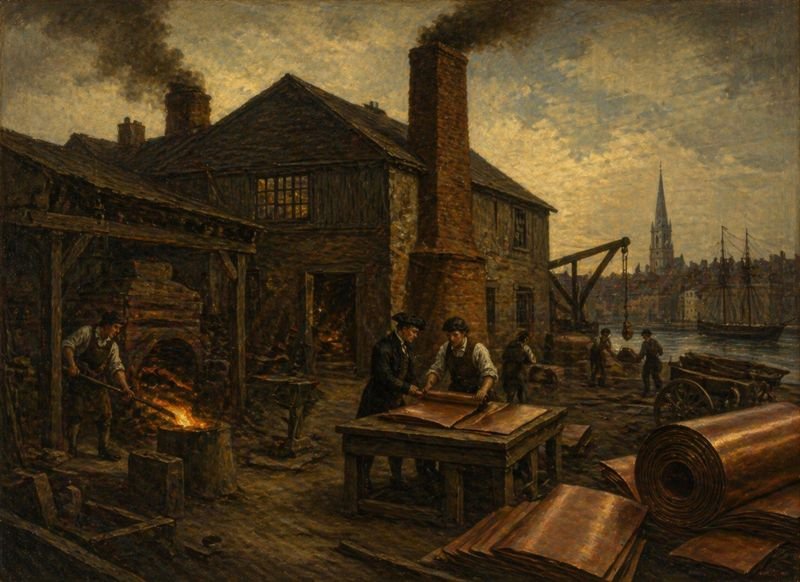
In the years following the American Revolution, Revere gradually moved away from traditional silversmithing and focused more on industrial production, including the establishment of a copper rolling mill. However, his reputation as a silversmith remained central to his legacy, representing the foundation upon which his later achievements were built.
Paul Revere’s work as a silversmith was not separate from his historical significance but deeply connected to it. His skills, his shop, and his position within the artisan community all contributed to the role he played in the broader events of his time. By viewing him through the lens of his craft, it becomes clear that his contributions were rooted in the practical and social realities of colonial Boston, where craftsmanship and community were closely intertwined.