Paul Revere Books

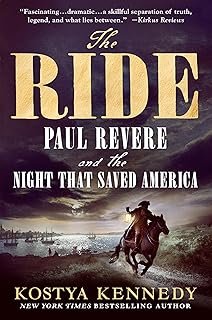
The Ride

Kostya Kennedy’s "The Ride: Paul Revere and the Night That Saved America" is a fast-paced and engaging retelling of one of the most iconic events in American history. Rather than presenting the midnight ride as a simple heroic legend, Kennedy carefully unpacks the complexity behind it, blending narrative storytelling with solid historical research. The result is a book that feels both accessible and informative, appealing to general readers as well as those with a deeper interest in Revolutionary War history.

Kennedy’s strength lies in his ability to bring urgency and drama to the events of April 18–19, 1775. The book reads almost like a thriller, with tension building as Revere and other riders race to spread the alarm. At the same time, Kennedy challenges familiar myths, showing that Revere was part of a wider network of riders and that the success of the mission depended on coordination rather than individual heroics.

The narrative also broadens its scope beyond a single night, providing context about Revere’s life, his earlier rides, and the political environment in Boston. This helps situate the event within the larger movement toward revolution, making it clear why the ride mattered so much. Kennedy’s use of fresh research and primary sources adds depth, while his journalistic style keeps the story moving at a brisk pace.

If there is a limitation, it is that the book is tightly focused on the ride itself rather than offering a full biography of Revere. However, this focus is intentional and ultimately works in its favor, delivering a clear and compelling account of a pivotal moment in American history.
Paul Revere & The World He Lived In

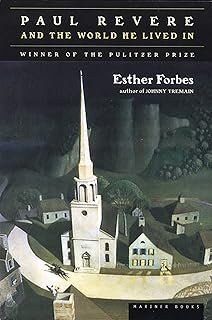
Esther Forbes’s "Paul Revere and the World He Lived In" is widely regarded as one of the most definitive biographies of Paul Revere, offering far more than a simple account of his life. First published in 1942 and awarded the Pulitzer Prize for History, the book stands out for its rich detail and narrative depth.

Rather than focusing narrowly on Revere’s famous midnight ride, Forbes places him within the broader context of 18th-century Boston. She reconstructs the social, economic, and political world in which he lived, bringing to life the streets, trades, and daily routines of colonial society. This approach makes the book feel expansive, almost like a portrait of an entire city as much as a single individual. Readers gain a sense of how Revere’s experiences as an artisan and community member shaped his role in the American Revolution.

Forbes’s writing style is both accessible and engaging, blending careful historical research with vivid storytelling. She avoids turning Revere into a one-dimensional hero, instead presenting him as a complex and practical figure whose contributions went far beyond a single dramatic moment.

Whilst the book reflects the era in which it was written, it remains highly readable and informative. Overall, it is a richly detailed and immersive study that not only deepens understanding of Paul Revere but also captures the atmosphere and character of revolutionary Boston.

Why Longfellow Lied

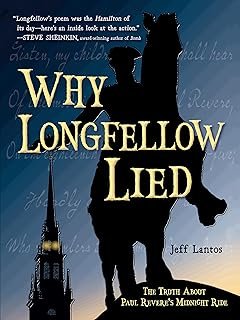
Jeff Lantos’s "Why Longfellow Lied: The Truth About Paul Revere’s Midnight Ride" offers a fresh and engaging reinterpretation of one of America’s most familiar historical stories. Rather than retelling the midnight ride as a straightforward heroic tale, Lantos deconstructs Paul Revere's Ride line by line, comparing the famous poem to the actual historical events. This approach makes the book both informative and thought-provoking, especially for readers who may have grown up with the mythologized version of Revere’s ride.

A key strength of the book is its accessibility. Lantos presents complex historical analysis in a clear and engaging way, using sidebars, visuals, and a conversational tone to guide readers through the differences between fact and fiction. The book highlights how Longfellow simplified events, turning a coordinated effort involving multiple riders into the story of a single heroic figure.

At the same time, Lantos avoids simply criticizing Longfellow. Instead, he places the poem in its historical context, showing how it was written to inspire unity in the lead-up to the Civil War. This adds depth, encouraging readers to think about how history is shaped by storytelling.

Overall, the book succeeds as both a history lesson and a lesson in critical thinking. It is especially effective for younger audiences, but its insights make it valuable for any reader interested in separating historical reality from enduring myth.

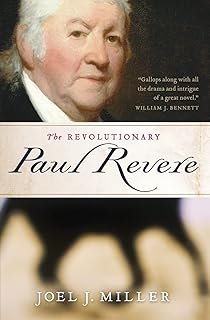
The Revolutionary Paul Revere

Joel J. Miller’s "The Revolutionary Paul Revere: A Biography of a Hero of the American Revolution" offers an engaging and accessible portrait of Paul Revere that goes well beyond the familiar story of his midnight ride. Rather than focusing narrowly on a single event, Miller presents Revere as a multifaceted figure—an artisan, entrepreneur, patriot, and community member—whose life intersected with many of the defining moments of the revolutionary era.

One of the book’s strengths is its narrative style. Miller writes with energy and clarity, making the story feel fast-paced and approachable. The biography follows Revere from his early life through his involvement in key events such as colonial protests, the Boston Massacre, and the outbreak of war, giving readers a strong sense of both the man and the times in which he lived . This broad scope helps show that Revere was not simply a symbolic figure, but someone deeply involved in the political and social fabric of Boston.

Another key feature is Miller’s emphasis on Revere as an “everyman.” Rather than portraying him as an untouchable hero, the book highlights his background as a working craftsman and his gradual rise into prominence. This makes him more relatable and underscores how ordinary individuals contributed to extraordinary historical change .

Whilst the book is well-researched, it is not overly academic, which makes it especially appealing to general readers. At times, the tone can feel slightly informal, but this also adds to its readability .

Overall, Miller’s biography succeeds as an engaging and informative introduction, bringing Paul Revere to life as a complex and active participant in the American Revolution.

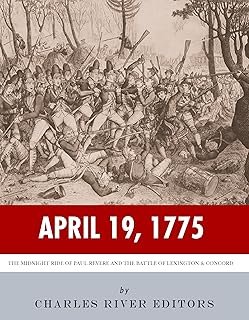
Paul Revere & Battles Of Lexington & Concord

"April 19, 1775: The Midnight Ride of Paul Revere and the Battles of Lexington & Concord" by Charles River Editors is a concise and accessible introduction to one of the most pivotal moments in American history. Designed as a short historical overview rather than an in-depth scholarly study, the book provides a clear narrative of the events surrounding Battles of Lexington and Concord and the famous ride of Paul Revere.

One of the book’s main strengths is its straightforward structure. It walks readers through the buildup to April 19, 1775, explaining how colonial tensions escalated into armed conflict. The account of Revere’s ride is placed within a broader communication network, helping readers understand that he was part of a coordinated warning system rather than a lone hero . This helps correct common misconceptions while still preserving the drama of the moment.

The book also benefits from including primary material and references to well-known interpretations, such as Longfellow’s poem, while acknowledging the myths that shaped public memory. This balance between storytelling and clarification makes it especially useful for readers new to the topic.

However, its brevity is both a strength and a limitation. While it is engaging and easy to read, it does not offer the depth or analysis found in more comprehensive histories.

Overall, it serves as a solid introductory guide, ideal for readers seeking a quick, informative overview of Revere’s ride and the opening clashes of the American Revolution.

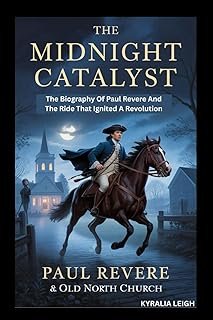
Paul Revere - Midnight Catalyst

Kyralia Leigh’s "The Midnight Catalyst: The Biography of Paul Revere and the Ride That Ignited a Revolution" presents an engaging and highly accessible retelling of Paul Revere’s most famous moment while situating it within the broader context of the American Revolution. Written in a narrative-driven style, the book leans into storytelling, aiming to immerse readers in the tension and urgency of the events surrounding April 1775.

A key strength of Leigh’s work is its readability. The book is designed to appeal to a general audience, using vivid descriptions and a fast-paced structure that gives the story a cinematic quality. The midnight ride is portrayed not as an isolated act, but as part of a wider chain of resistance, emphasizing coordination and the growing unrest in the colonies. This aligns with the idea that Revere’s ride was a carefully organized warning effort rather than a lone heroic dash .

The book also succeeds in highlighting the stakes of the moment, framing the ride as a turning point that helped ignite open conflict. However, its focus on narrative momentum means it is less analytical than more academic works. Readers looking for deeper historiographical debate or extensive sourcing may find it somewhat limited in scope.

Overall, The Midnight Catalyst works well as an introductory or popular history account. It captures the drama and significance of Revere’s ride while making the story accessible, engaging, and easy to follow for modern readers.